
Author: Oscar Wilde. Genre: Comedy of manners, satire.
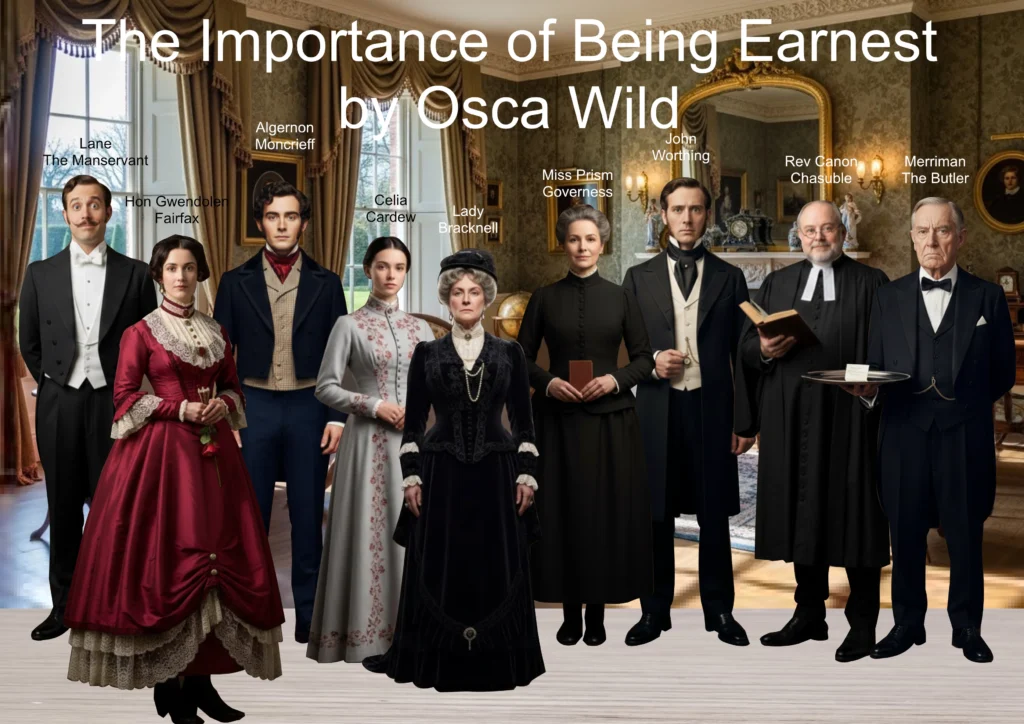
Setting: Late 19th-century England (London and a country estate).
Premise: Two young gentlemen, Jack (John) Worthing and Algernon Moncrieff, each invent alternate identities to escape social obligations. Jack, who lives responsibly in the country as guardian to Cecily Cardew, uses the fictitious younger brother “Ernest” as a pretext to visit London. Algernon invents an invalid friend “Bunbury” to avoid dull engagements.
Plot (concise):
- In London, Algernon meets Jack’s ward, Cecily’s guardian identity concealed; Jack proposes to Algernon’s cousin Gwendolen Fairfax, who declares she could only love a man named “Ernest.” Jack plans to adopt the name Ernest to win her.
- Algernon visits Jack’s country estate posing as “Ernest,” wins Cecily’s affection. Both women believe they’re engaged to a man named Ernest.
- Complications intensify when Jack’s real backstory is revealed: orphaned, found in a handbag at a railway station and adopted by Mr. Thomas Cardew. A visiting older woman, Lady Bracknell (Gwendolen’s mother), inspects prospects and objects to Jack’s origins.
- Revelations culminate: Jack’s true identity is discovered—he is actually the long-lost younger brother of Algernon and his real name is Ernest. With this, Lady Bracknell’s objections dissolve.
- Romantic pairings are confirmed (Jack/ Gwendolen and Algernon/ Cecily), and the comic deceptions are forgiven.
Major characters:
- Jack (John) Worthing (Ernest) — responsible country gentleman with a double life.
- Algernon Moncrieff — witty, pleasure-seeking bachelor.
- Gwendolen Fairfax — Algernon’s elegant cousin; enamored with the name “Ernest.”
- Cecily Cardew — Jack’s romantic young ward, fascinated by unconventional romance.
- Lady Bracknell — formidable social gatekeeper.
- Miss Prism — governess with a secret past; Reverend Chasuble — local clergyman.
Themes and tone:
- Satire of Victorian social conventions, marriage, and the importance placed on names, manners, and appearances.
- Wit, paradox, and epigrammatic dialogue underpin a light, farcical tone that exposes hypocrisy and frivolity.
Conclusion: The play resolves its farcical misunderstandings with revelations that restore social order and unite the couples, while maintaining Wilde’s sharp satire of societal pretensions.