
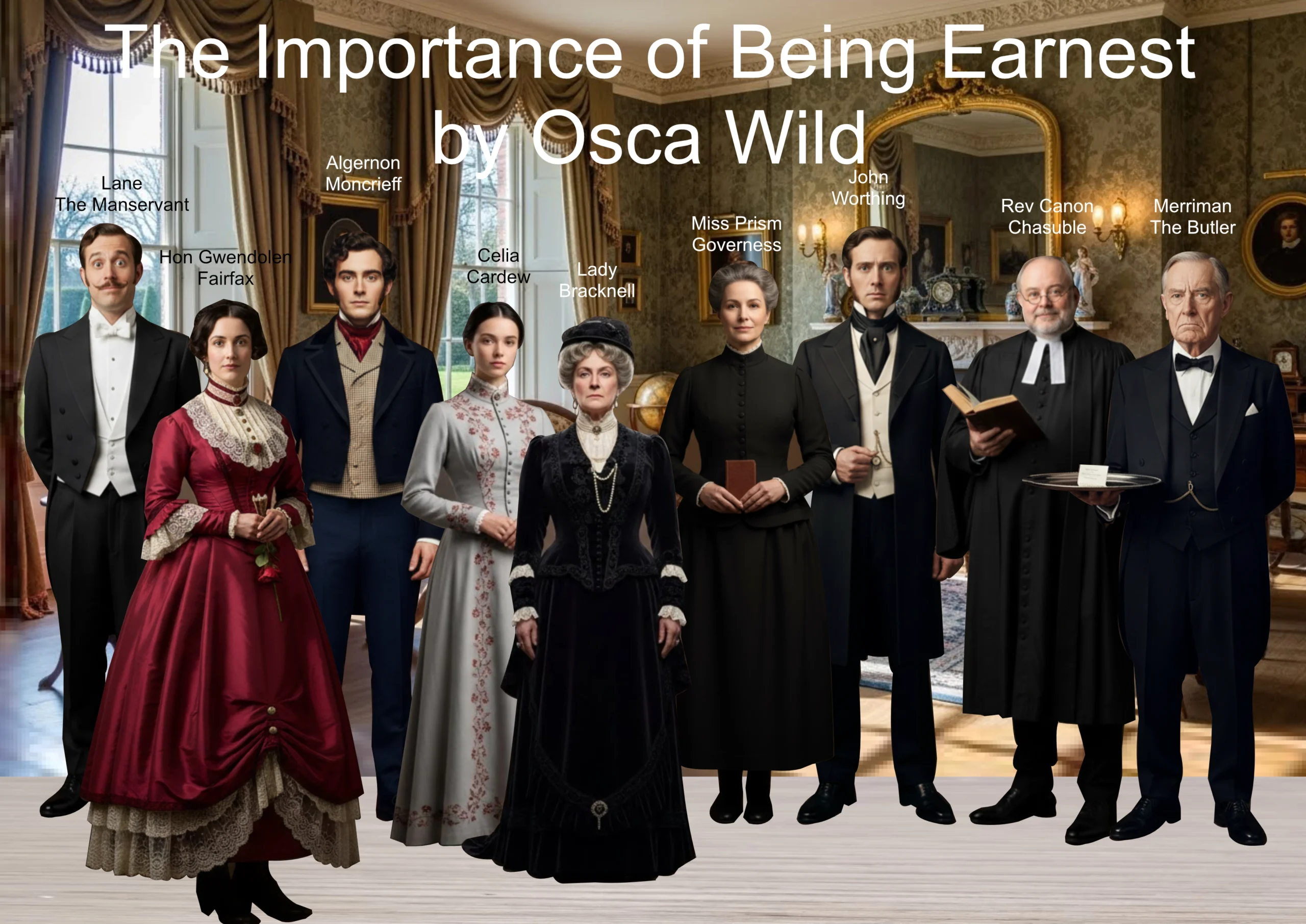
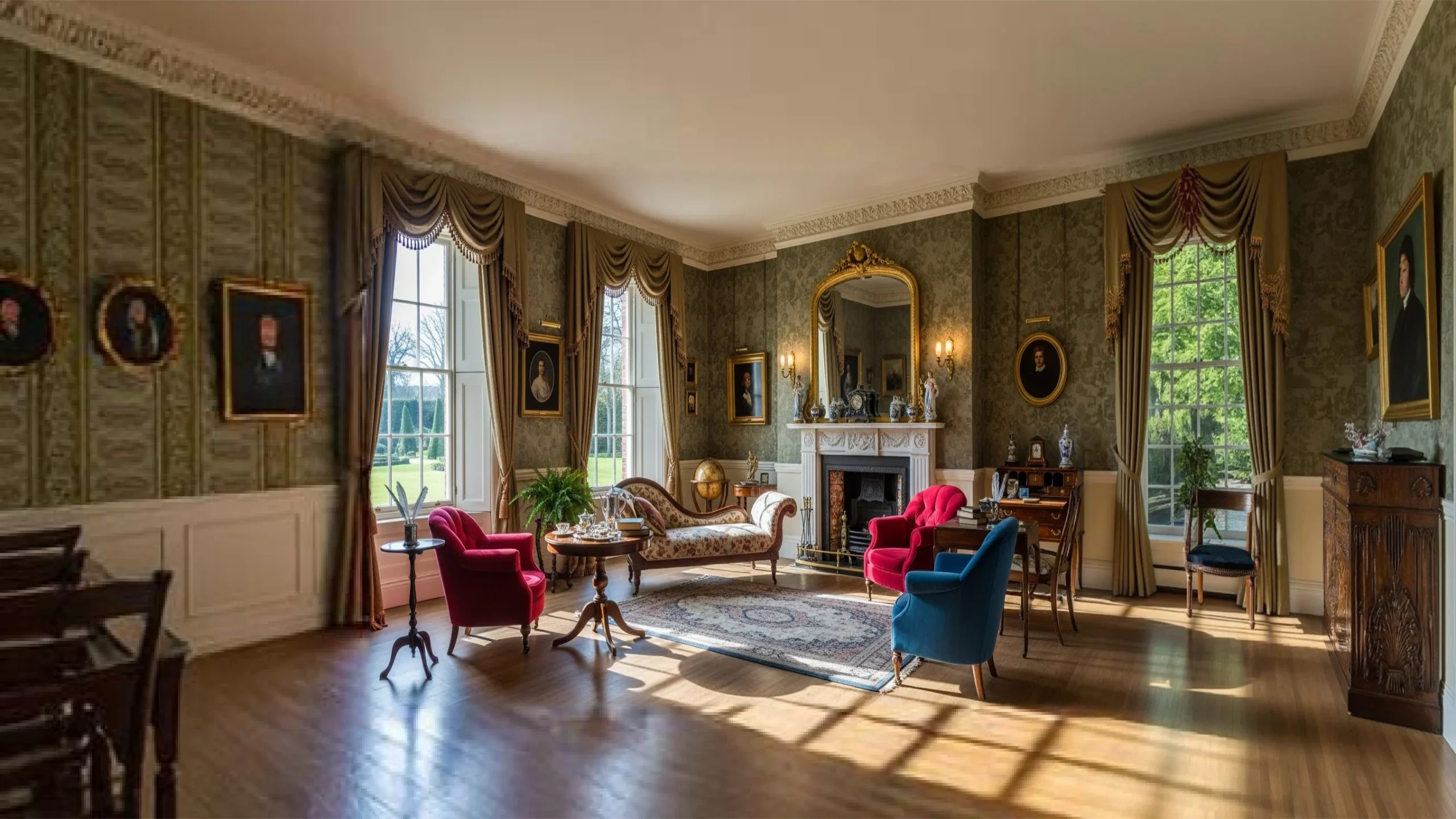



The Importance of Being Earnest by Osca Wild – Play Set comprises of 8 characters, 3 Backdrops and scenery, 3 play books as follows:
Characters
- John (Jack) Worthing — country gentleman, guardian to Cecily; leads double life as “Ernest.”
- Algernon Moncrieff — witty bachelor, friend of Jack; invents “Bunbury” as an excuse to escape obligations.
- Gwendolen Fairfax — Algernon’s cousin; fashionable, romantic, obsessed with the name “Ernest.”
- Cecily Cardew — Jack’s young ward at his country manor; imaginative and romantic.
- Lady Bracknell — Gwendolen’s formidable mother; epitome of Victorian social values.
- Reverend Canon Chasuble — local clergyman, mild and respectable.
- Miss Prism — governess to Cecily; has a mysterious past and comic role in plot revelations.
- Lane — Algernon’s servant (minor).
- Merriman — Jack’s butler/servant (minor).
Backdrop and Scene breakdown (by act)
- Act I — Algernon’s flat in London
- Introduces Algernon and Jack; Jack reveals his double life and intention to propose to Gwendolen. Lady Bracknell interrogates Jack’s origins. Sets up the central comic conflicts.
- Act II — The garden at Jack’s country manor (the Manor House)
- Algernon, posing as “Ernest,” woos Cecily. Cecily and Gwendolen both express obsession with the name “Ernest.” Mistaken identities and romantic complications deepen; Miss Prism and Chasuble appear.
- Act III — Morning-room/drawing-room at the Manor House
- Revelations and confrontations: Lady Bracknell arrives; Jack’s true parentage is discovered; identities resolved; couples are approved and matched, ending in comic reconciliation.
Short note: The play is structured as a three-act comedy of manners, driven by witty dialogue, mistaken identity, and satirical social observation.
The Importance of Being Earnest is a comic play about mistaken identities, social satire, and romantic entanglements among Victorian upper-class characters.
Plot summary (concise)
- Two young gentlemen, Jack Worthing and Algernon Moncrieff, each invent a fictitious persona named “Ernest” to escape social obligations and pursue romantic interests. Jack, who uses the name Ernest in the city, is guardian to Cecily; Algernon invents an invalid friend “Bunbury” to avoid dull duties.
- Jack plans to propose to Algernon’s cousin Gwendolen, who insists she could only love a man named Ernest. Algernon visits Jack’s country estate posing as “Ernest” and woos Cecily, who has already romanticized the name.
- Confusion escalates when both women believe they are engaged to “Ernest.” Gwendolen and Cecily clash and then bond over their devotion to the name. Secrets unravel: Jack’s origins are unclear, and his ward Cecily’s diary and engagements complicate matters.
- Ultimately, revelations about Jack’s true parentage show he really is Ernest after all, resolving the romantic entanglements. Social pretenses are exposed but forgiven amid witty dialogue and farcical resolution.
Key themes
- Satire of Victorian social conventions, especially marriage, respectability, and class.
- Identity and duplicity—how people perform roles to escape obligations or gain advantage.
- The triviality of social values—Wilde mocks how superficial details (names, appearances) influence serious decisions.
- Wit and language—epigrams and paradoxes highlight form over moralizing content.
Tone and style
- Light, farcical, highly verbal comedy with rapid-fire wit, paradox, and epigrammatic lines; more concerned with satire and style than realist psychology.
Reviews
There are no reviews yet.